

Air Duct System Cleaning in San Jose, CA — Methods, Best Practices, and What to Expect
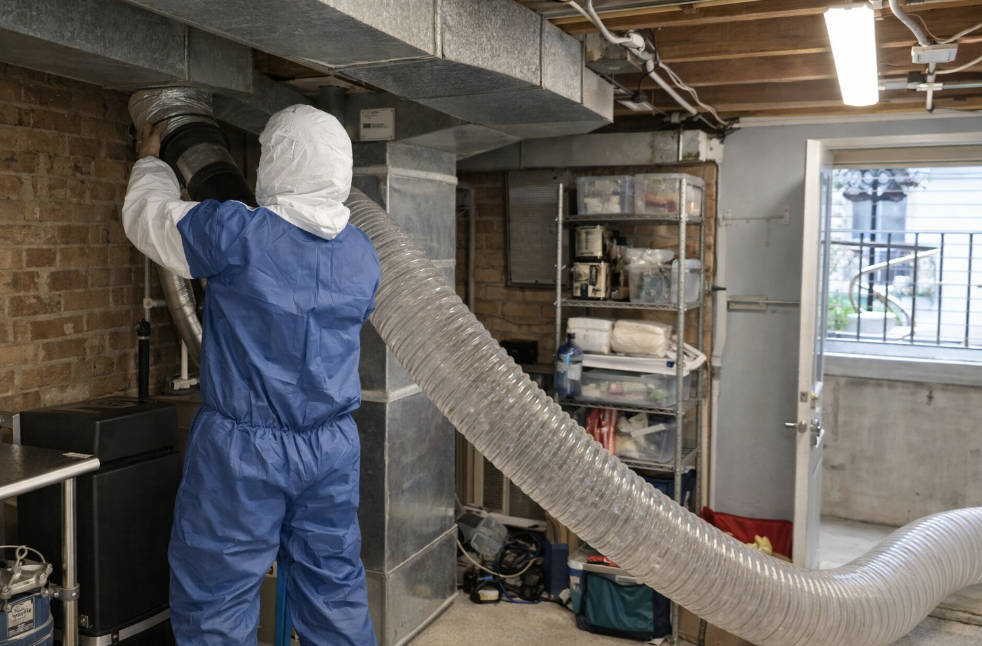
Breathable crew prepping for a full negative-pressure duct cleaning in a 1970s ranch home in South San Jose.
Quick Answer
Best-practice air duct system cleaning in San Jose starts with choosing the right extraction method for your duct type — traditional negative-pressure vacuum for accessible sheet-metal systems, high-velocity roto-brush equipment for systems with long flex runs or stubborn buildup, or a combination of both. Proper containment is non-negotiable regardless of method, so debris doesn't escape into your living space.
A complete service always includes the air handler — blower wheel, evaporator coil, and drain pan — not just the duct runs. In a Valley home that runs AC five months a year, the coil and blower accumulate as much contamination as the ducts themselves, and skipping them negates most of the benefit. (See how the same principles apply in our air duct cleaning San Francisco guide.)
Need air duct system cleaning in San Jose? We’ll provide a clear scope before any work begins.
Serving San Jose — including Willow Glen, Cambrian Park, Blossom Valley, Almaden Valley, Evergreen, and surrounding South Bay communities.
How San Jose's Housing Stock Shapes the Cleaning Approach
San Jose's housing stock is overwhelmingly mid-century — tract homes from the 1950s through 1980s dominate neighborhoods like Willow Glen, Cambrian Park, Blossom Valley, and Almaden Valley. Most of these homes have forced-air systems fed by sheet-metal trunk lines that run through unconditioned attics or tight crawlspaces, with flexible branch ducts snaking to each room. The duct geometry and access constraints in these homes directly affect which cleaning method is appropriate: accessible attic trunks are good candidates for negative-pressure vacuum, while long, compressed flex runs often need roto-brush agitation to shift material that vacuum flow alone won't move.
Newer construction in areas like North San Jose and Evergreen tends to have better-sealed ducts and more accessible air handlers, but these homes run their systems hard — Valley summers regularly push into the mid-90s, and it's not uncommon to see AC running from late April through October. More runtime means more particulate cycling through the system, which means meaningful buildup inside the ducts and especially on the evaporator coil and blower wheel.
Homes near Highway 87 and Tully Road corridors and close to I-680 also contend with persistent vehicle particulates year-round. Combined with the August–October wildfire smoke that drifts in from the Diablo Range and Sierras, you get a genuinely demanding air quality environment — which is why filtration strategy matters as much as the cleaning itself. Homes with serious ongoing air quality concerns sometimes pair duct cleaning with a whole house air purification system for a more complete solution.
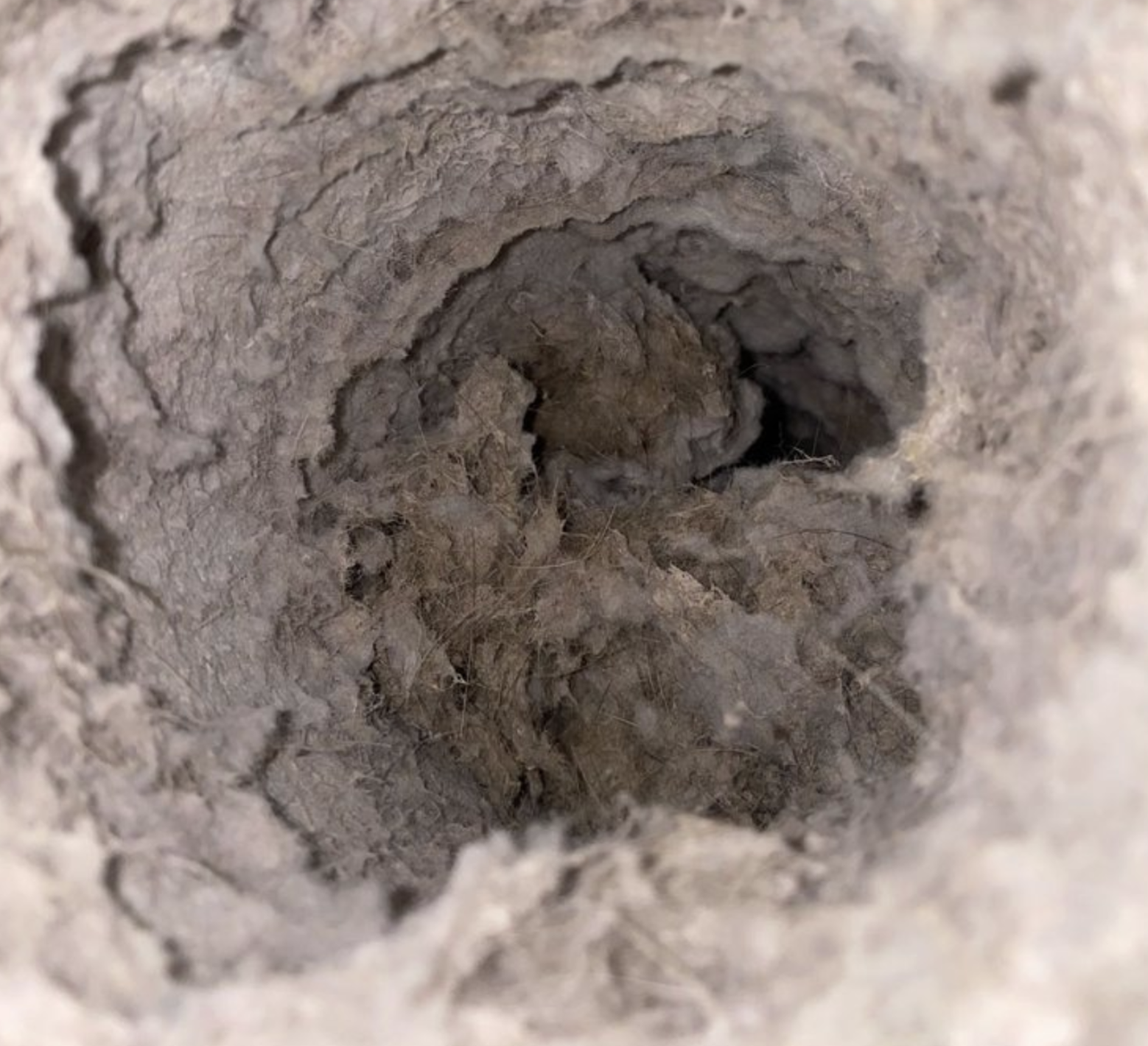
Typical flex-duct condition in a Cambrian Park home built in 1968 — 22+ years since last cleaning.
Cleaning Methods: Negative Pressure vs. Roto-Brush
There are two legitimate containment-based approaches to duct cleaning, and the right choice depends on your system's duct type, layout, and condition. Understanding the difference helps you evaluate any quote you receive.
Traditional negative pressure is the industry-standard method for most residential systems. A HEPA-filtered vacuum collection unit — truck-mounted or trailer-based — connects at the return air plenum or a main trunk access point. The system is placed under negative pressure, then technicians agitate debris from the far end of each run toward the collection point using rotary brushes and compressed air whips. Because the entire system is held below atmospheric pressure throughout, loosened material travels toward the vacuum rather than escaping into the home.
Roto-brush equipment takes a different approach and is often the better choice for systems where negative pressure alone can't generate sufficient velocity — long flex run networks, heavily packed debris, or configurations with multiple restrictions. A motorized spinning brush head is fed through the duct, mechanically scrubbing deposits off the wall and driving them toward a co-located vacuum at the access point. It doesn't rely on airflow velocity to move material; the brush does the work directly. The practical limitation is access: roto-brush systems work best in sheet-metal trunk lines and larger diameter runs where the head can travel cleanly. On many San Jose jobs, both methods get used on the same system — negative pressure on the trunk, roto-brush on the branch runs.
Either way, best practice requires opening the air handler as part of the service. The blower wheel, evaporator coil, drain pan, and housing interior accumulate as much contamination as the duct runs — sometimes more. A blower wheel with heavy buildup on every blade restricts airflow, increases energy draw, and shortens equipment life. It's a core part of the cleaning, not an add-on.
Special Conditions That Affect Cleaning Method and Scope
Older San Jose homes — especially those built before 1978 — sometimes have duct insulation or adjacent attic materials that contain asbestos. If your attic insulation is vermiculite, or if you have old asbestos-wrapped duct near the furnace, the appropriate first step is asbestos testing and abatement by a licensed contractor — not duct cleaning. Best practice here is straightforward: test before anyone opens up the system.
Fiberglass-lined ductwork — the kind with soft interior walls instead of bare sheet metal — requires gentler brushing technique and lower agitation pressure to avoid fiber release into the airstream. The cleaning is still appropriate and effective; it just calls for adjusted tool selection and method. It's worth noting the duct type when scheduling so the right equipment comes on the truck.
If your ducts are visibly deteriorated — flex runs that have separated at the joints, collapsed sections, or significant air leaks — the best practice is to address duct sealing or repair before cleaning. A leaking system redistributes conditioned air into unconditioned spaces regardless of how clean the interior surface is. Our air duct system inspection and repair service covers that evaluation and scope.
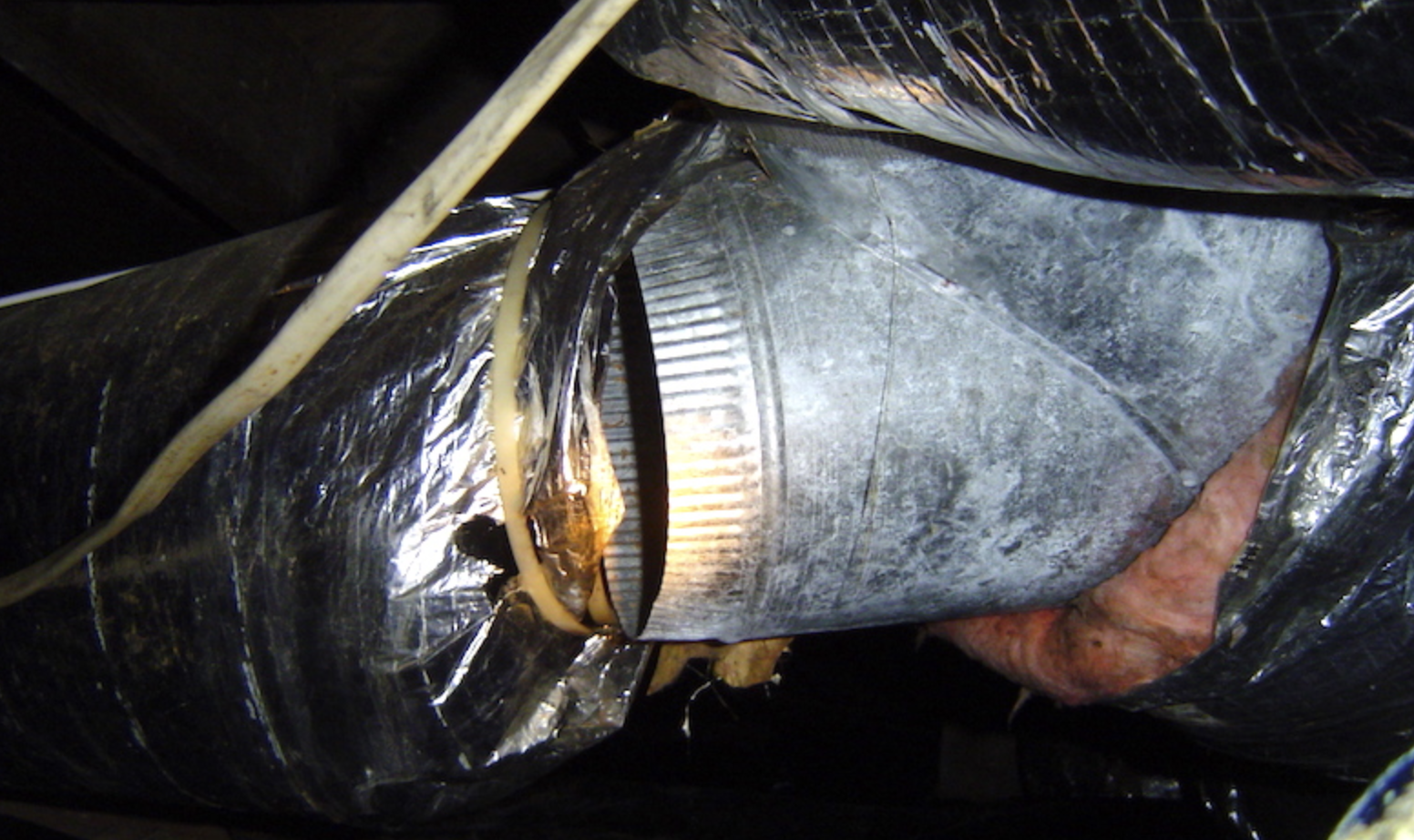
This Blossom Valley home needed duct sealing, not cleaning — the flex had separated at three joints. Cleaning it first would have been wasted money.
When Air Duct Cleaning Is Recommended for San Jose Homes
After purchasing a home with no cleaning history — standard best practice before occupying a resale, especially common with Valley tract homes that change hands every 7–12 years
Visible debris, mold, or rodent evidence at the register boots — a clear indicator that the system interior needs professional extraction, not just filter replacement
Following interior construction work — kitchen remodels, flooring replacement, or attic insulation blow-ins introduce drywall dust and debris that bypasses the filter and settles inside the duct runs
Persistent allergy or asthma symptoms that aren't resolved by upgraded filtration alone — cleaning removes the reservoir of particulate that filtration can only slow down
Musty odor on first startup — indicates biological growth on the coil or in the drain pan that requires mechanical cleaning and treatment, not just filter changes
Reduced airflow or increased system noise — blower wheel buildup is a common and underdiagnosed cause; it's confirmed during the air handler cleaning phase
New equipment installation — best practice is to clean the existing duct system before commissioning a new furnace or air handler so the new equipment starts clean
Homes in Willow Glen, downtown San Jose, or near major arterials where urban particulate load is consistently higher than suburban areas
Five or more years since the last full cleaning including the air handler — in San Jose's cooling-heavy climate, this is the standard recommended interval for an occupied home
After a wildfire smoke event where the system ran through elevated AQI — fine smoke particles bypass standard filters and deposit on the coil and inside duct surfaces
Filtration Best Practices for San Jose's Air Quality Environment
San Jose sits in a basin without the marine layer that scrubs coastal air. On still days — common in fall and early winter — particulate and ozone accumulate. The Bay Area Air Quality Management District issues Spare the Air alerts regularly from May through October, and when wildfire smoke arrives (which it does most years), AQI readings in downtown San Jose and Evergreen can spike well above 150 for days at a stretch.
This shapes best practice for both cleaning frequency and filtration selection. Running the AC or fan during a smoke event pushes fine particles through the system — a clean duct network with a properly sized MERV-16 filter captures them; a dirty system with a thin 1" filter deposits them further into the ductwork. After the 2020 fires, systems in Almaden Valley and Silver Creek showed visible orange-brown deposits inside supply runs and on coil surfaces — smoke particles that baked on and built up over days of runtime.
Best practice for San Jose homes is to pair any thorough cleaning with an upgrade to a 4" or 5" media filter at the air handler — MERV-16 is the recommended minimum for Valley conditions. The larger filter surface area maintains adequate airflow while capturing finer particles, which is why cleaning holds up for 5 years instead of 2. Not sure whether upgrading your filter will strain the system? We covered that directly: do high MERV filters really strain your HVAC system?
Best Practice: What a Complete Air Duct Cleaning Service Covers
Assess the system and choose the right method. We look at duct type, layout, access points, and condition before setting up equipment. Sheet-metal trunks with good access suit traditional negative-pressure vacuum. Long flex runs with heavy buildup or restricted access often call for roto-brush equipment — or a combination of both on the same job. This decision gets made at the house, not in the office.
Set up containment. For negative-pressure work, our HEPA-filtered collection unit connects at the return air plenum or a main trunk access point. We confirm the system is drawing negative pressure across the duct network before agitation starts — nothing leaves the system without going through the filter. For roto-brush work, the vacuum is co-located with the brush head at each access point.
Agitate and extract every branch. Working from the supply registers back toward the collection point, we use rotary brushes, air whips, or the roto-brush head depending on what each run calls for. Every register boot gets pulled and cleaned. This takes time — a properly done 2,000 sq ft house takes 4–6 hours.
Clean the return side. Return air ducts carry dirty air back to the air handler — they're often worse than the supply side. We brush and extract those runs too.
Open and clean the air handler. Blower wheel, evaporator coil, drain pan, and housing interior. We photograph everything before and after. If the coil has significant biological growth, we apply an EPA-registered coil treatment.
Seal any open access holes. Anywhere we opened the duct system to insert tools, we close and seal properly — no foil-tape slap jobs.
Final walkthrough. We confirm airflow at the registers, review the filter recommendation, and walk you through what we found before we leave.
Timeline and What to Expect on Service Day
For a typical San Jose single-story ranch — 1,400–2,000 sq ft, one air handler, 10–16 registers — a thorough cleaning takes 2–5 hours from arrival to cleanup. Two-story homes or anything with a second HVAC zone adds 2–3 hours. The agitation-and-extraction cycle on each branch run takes time to do correctly; it's not a job that should be completed in under two hours for a full-size home.
Plan to be present, especially for the initial walkthrough and final check. The equipment is loud — the vacuum unit runs continuously at shop-vac volume or higher — and access hatches will be open in the hallway, utility closet, or attic for part of the job.
After the service, expect the system to smell cleaner within the first few cycles. Any musty first-startup odor should be gone. Airflow at the registers typically improves noticeably after blower cleaning. If it doesn't, the cause is likely elsewhere — duct sizing, a damper position, or a refrigerant issue — and a good technician will say so rather than claim the cleaning fixed something it didn't. If it turns out the system itself needs replacing, see our guide to heat pump installation best practices in San Jose.
Frequently Asked Questions: Air Duct Cleaning in San Jose, CA
How often should I clean my ducts in San Jose?
For an occupied home in San Jose's climate — where the AC runs most of the summer and wildfire season adds particulate — every 4–6 years is realistic for a full cleaning including the air handler. If you have pets, do a lot of cooking, or have someone with respiratory issues in the house, 3–4 years is more appropriate. If you installed a high-efficiency media filter at the air handler, the ducts stay cleaner longer — closer to the 6-year end of that range.
Does air duct cleaning help with allergies or asthma?
It can, but it's not a standalone fix. Cleaning removes accumulated dust, pet dander, and other allergens from the duct surfaces and air handler — which reduces what gets recirculated. Pairing the cleaning with a MERV-16 or better filtration upgrade gives you meaningful, lasting improvement. If symptoms persist, look at ventilation rates and humidity control too.
What's a realistic price range for duct cleaning in San Jose?
A legitimate, thorough job for a 1,500–2,500 sq ft home in San Jose typically runs $500–$900, depending on number of registers, accessibility, and whether the air handler is included (it should be). Quotes below $200–$300 are almost always the blow-and-go method. They're not a deal — they're a different, less effective service being sold under the same name.
Does duct cleaning require a permit in San Jose?
Cleaning existing ductwork doesn't require a permit. If the work includes modifying, replacing, or sealing ductwork — particularly if connected to a furnace or air conditioning system — that work falls under HVAC mechanical permits through the City of San José's Building Division (permits.sanjoseca.gov). We handle permit coordination for any scope that requires it.
What if mold is found in my ducts?
Surface mold on metal ductwork — typically visible as dark deposits around the coil, drain pan, or return plenum — can often be cleaned and treated with an EPA-registered antimicrobial agent as part of the service. Extensive mold inside fiberglass-lined duct or in cases where moisture intrusion is ongoing requires remediation, not just cleaning. We'll tell you which you have and recommend accordingly — we're not going to clean over an active moisture problem and call it done.
Should I clean my ducts after wildfire smoke events?
If your system ran during a heavy smoke event with AQI above 150 and you had a standard 1" filter in place, yes — wildfire smoke particulate is fine enough to bypass cheap filters and deposit on the coil and inside the ducts. Replace your filter immediately after any major smoke event, and schedule a coil inspection if the system ran for days through it. A full duct cleaning may not be necessary, but coil and blower inspection often is.
What should I look for when evaluating an air duct cleaning company in San Jose?
Three things matter most. First, containment method: the technician should be able to explain whether they'll use negative-pressure vacuum, roto-brush with a co-located vacuum, or both — and why, based on your system type. Second, air handler inclusion: blower wheel and evaporator coil cleaning should be part of the standard scope, not an add-on. Third, scope transparency: the quote should specify what gets cleaned, what method will be used, and what the access points are before any work begins. A company that can't answer these questions specifically is likely applying a one-size-fits-all approach regardless of your system's actual needs.
Ready to schedule air duct system cleaning in San Jose?