

Air Duct Cleaning in San Francisco: What Actually Improves Air Quality (and What Doesn’t)
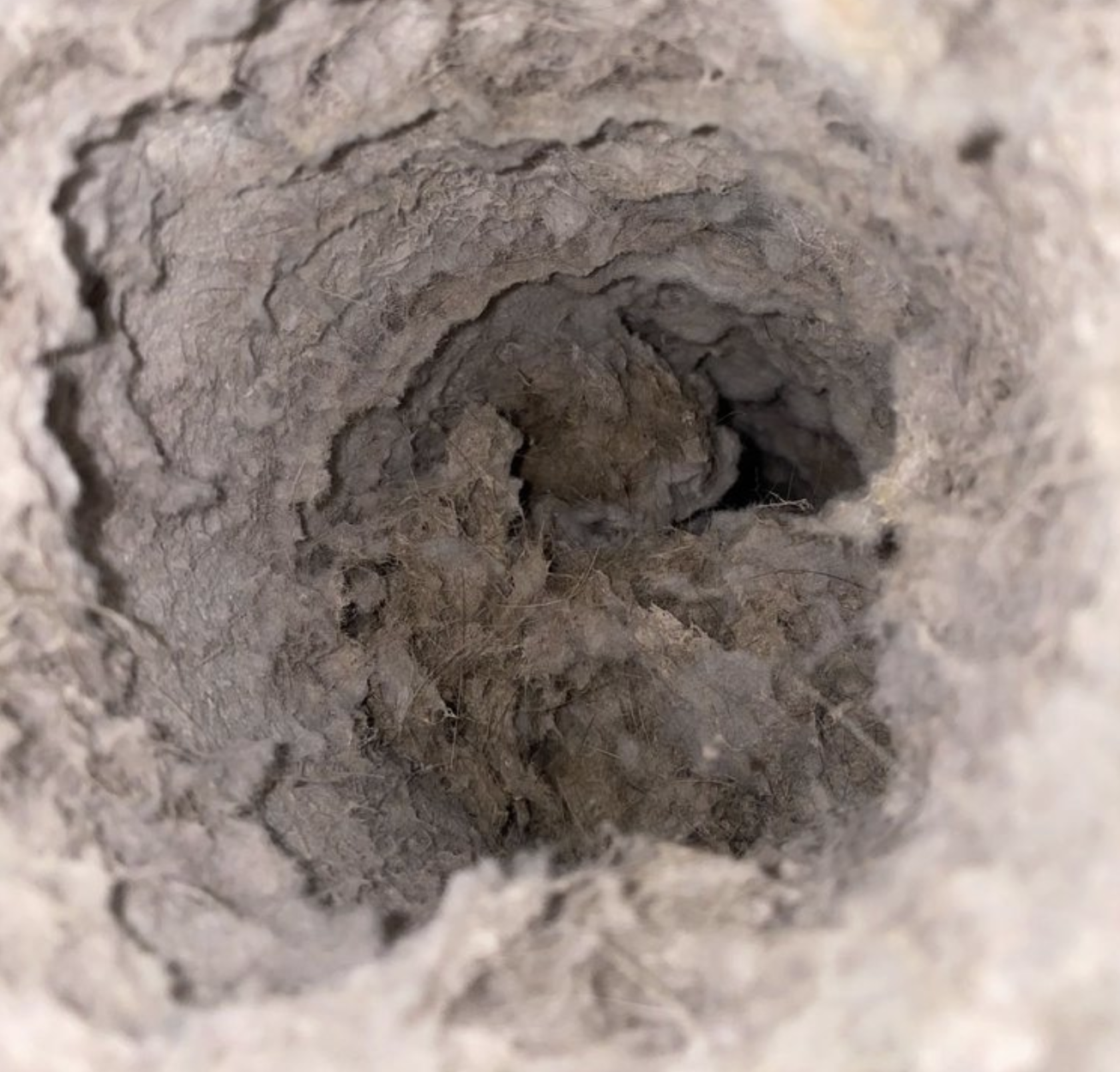
Dirty air duct in the Mission District, San Francisco.
Quick Answer
Quick Answer: Professional air duct cleaning can improve indoor air quality and airflow only when it’s done with proper mechanical agitation and HEPA collection at the source. In San Francisco homes, it’s most valuable when ducts are contaminated by construction dust, debris, or when leaky return ducts pull air from crawlspaces, basements, or wall cavities. A real cleaning isn’t “just a vacuum”—it’s a controlled, system-wide process. In special cases—such as asbestos-wrapped or inaccessible ducts—the safer approach is a negative-pressure-only method focused on containment rather than agitation.
Need Air Duct Cleaning in San Francisco?
Get a clear scope, before/after photos, and a straightforward quote.
Air Duct Cleaning in Real San Francisco Homes
San Francisco homes are very different from newer suburban construction. We regularly work in houses where the air handler is in a basement, garage, or utility closet, and where ducts run through crawlspaces, wall cavities, and tight subfloor areas. Many of these systems have been modified over decades—additions, remodels, furnace swaps, and now heat-pump upgrades—often without the duct system ever being properly cleaned or sealed.
In practice, this means we commonly see:
Dust and debris from past remodeling
Insulation fibers and construction material inside ducts
Leaky return ducts pulling air from crawlspaces or wall cavities
Musty or stale odors when the system runs
Old boots and transitions that were never properly sealed
In older SF homes, access and duct condition matter as much as the cleaning itself. A good job isn’t about forcing equipment into tight spaces—it’s about designing the process around the building so debris is removed safely and without contaminating the living space.
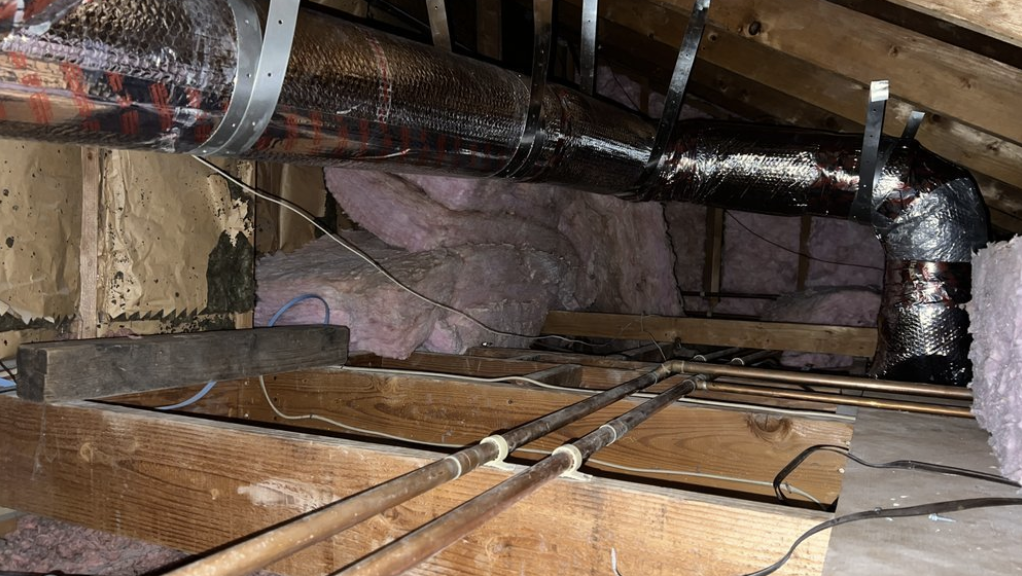
Attic air duct in Noe Valley, San Francisco
Why “Blow-and-Go” Duct Cleaning Doesn’t Work
Many homeowners have tried duct cleaning and felt nothing changed. That’s usually because some companies rely on negative-air-only setups: connect a big vacuum, maybe wave some air around, and leave.
The problem:
Dust sticks to duct walls
Debris settles in corners, seams, and transitions
Air alone does not remove adhered buildup
A proper cleaning uses mechanical agitation (brushes or contact tools) combined with HEPA vacuum collection at the source. Brushes dislodge debris; the vacuum captures it immediately instead of spreading it through the home.
At Breathable, our standard process uses:
Mechanical brushes + HEPA vacuums
Source capture (no “dust clouds” in your house)
Before & after photos
Targeted dust control (no need to tape off every vent in most homes)
When a Different Approach Is Safer: Asbestos-Wrapped or Inaccessible Ducts
While mechanical agitation + HEPA collection is the most effective method for most systems, not every home should be treated the same way.
In some older San Francisco houses, we encounter asbestos-wrapped ducts or duct runs that are inaccessible without disturbing original materials. In those cases, the priority isn’t aggressive scrubbing—it’s safety and containment.
If asbestos-containing materials are present, brushing or agitation can increase the risk of releasing fibers. When conditions call for it, the safer approach is a negative-pressure-only method without agitation, designed to:
Keep the system under controlled negative pressure
Capture loose debris without disturbing encapsulated materials
Minimize fiber release risk
Reduce exposure for occupants and technicians
This won’t remove adhered buildup like brushing does—but in asbestos-adjacent or hard-to-access situations, the goal shifts from “deep scrubbing” to risk-managed containment.
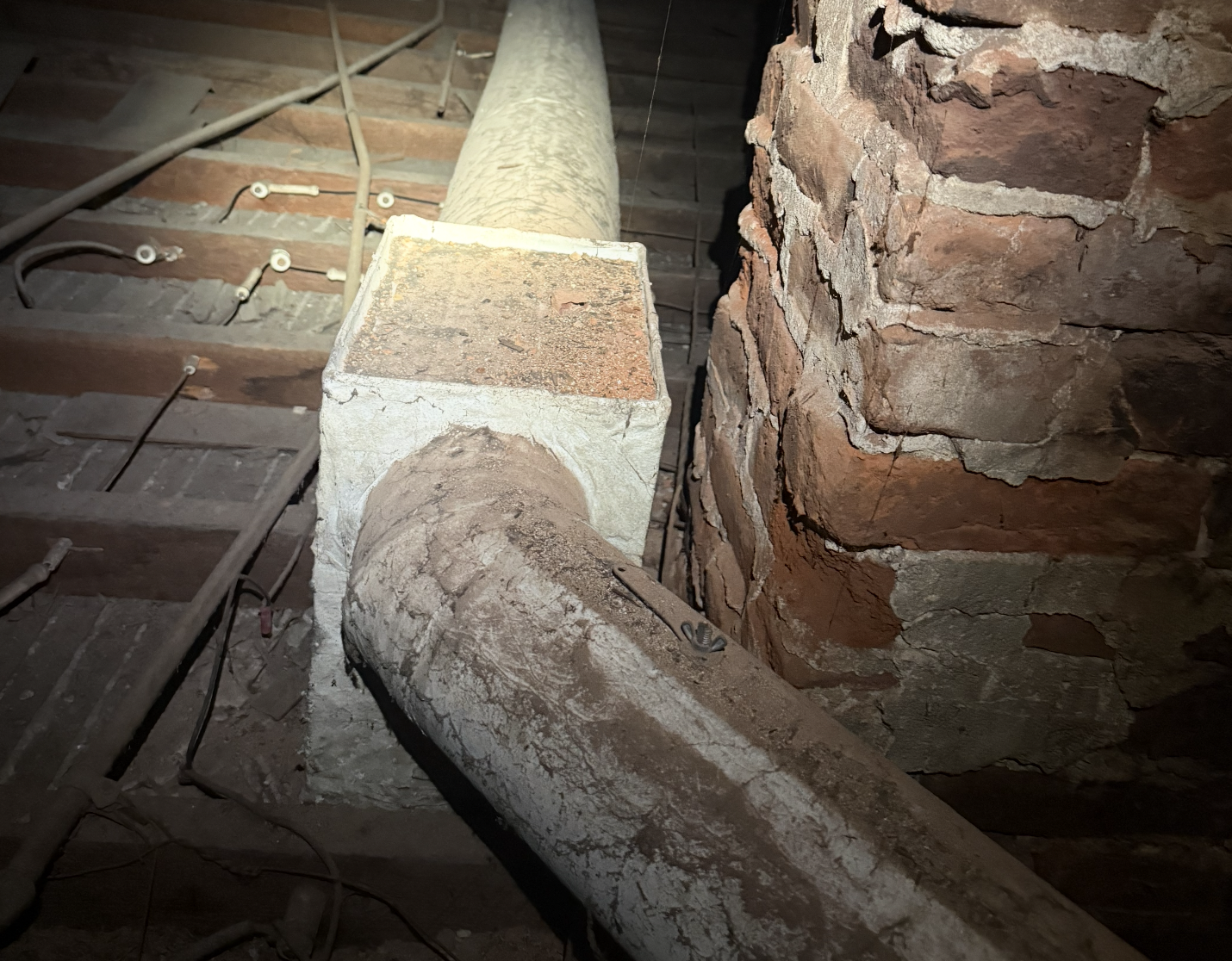
Asbestos wrapped ducts: Bernal Heights, San Francisco
When Air Duct Cleaning Actually Makes Sense
Air duct cleaning isn’t something every home needs every year. It does make sense when:
You’ve had remodeling or construction work
There’s visible dust or debris inside the ducts or at the vent openings
Musty or stale odors come from the vents when the system runs
There was a rodent issue or heavy debris contamination
Airflow is being restricted by internal buildup
You’re upgrading HVAC equipment and want a clean system to start with
You’re moving into a home where the duct system hasn’t been cleaned in many years and you want a known baseline
There are concerns about past moisture issues or potential mold growth, especially in crawlspaces, basements, or poorly ventilated areas
The home has older or leaky ductwork that may be pulling in dust, insulation fibers, and odors from crawlspaces or wall cavities
It’s also important to understand that cleaning works best when the duct system is intact and airtight. In older construction, leaky return ducts don’t just get dirty faster—they can actively pull in contaminants from crawlspaces and wall cavities. In those cases, cleaning alone helps, but sealing the duct system is often what makes the results last.
Air Quality, Filtration, and San Francisco’s Wildfire Reality
Wildfire smoke has changed how we think about indoor air quality. A clean duct system is only part of the equation—the system also needs to support high-efficiency filtration.
Many homeowners want high-MERV filters (such as MERV 16) to capture fine smoke particles. That works only if:
The duct system is airtight
The filter housing is properly sized
The system can handle the added resistance
Otherwise, even the best filter can hurt comfort and performance.
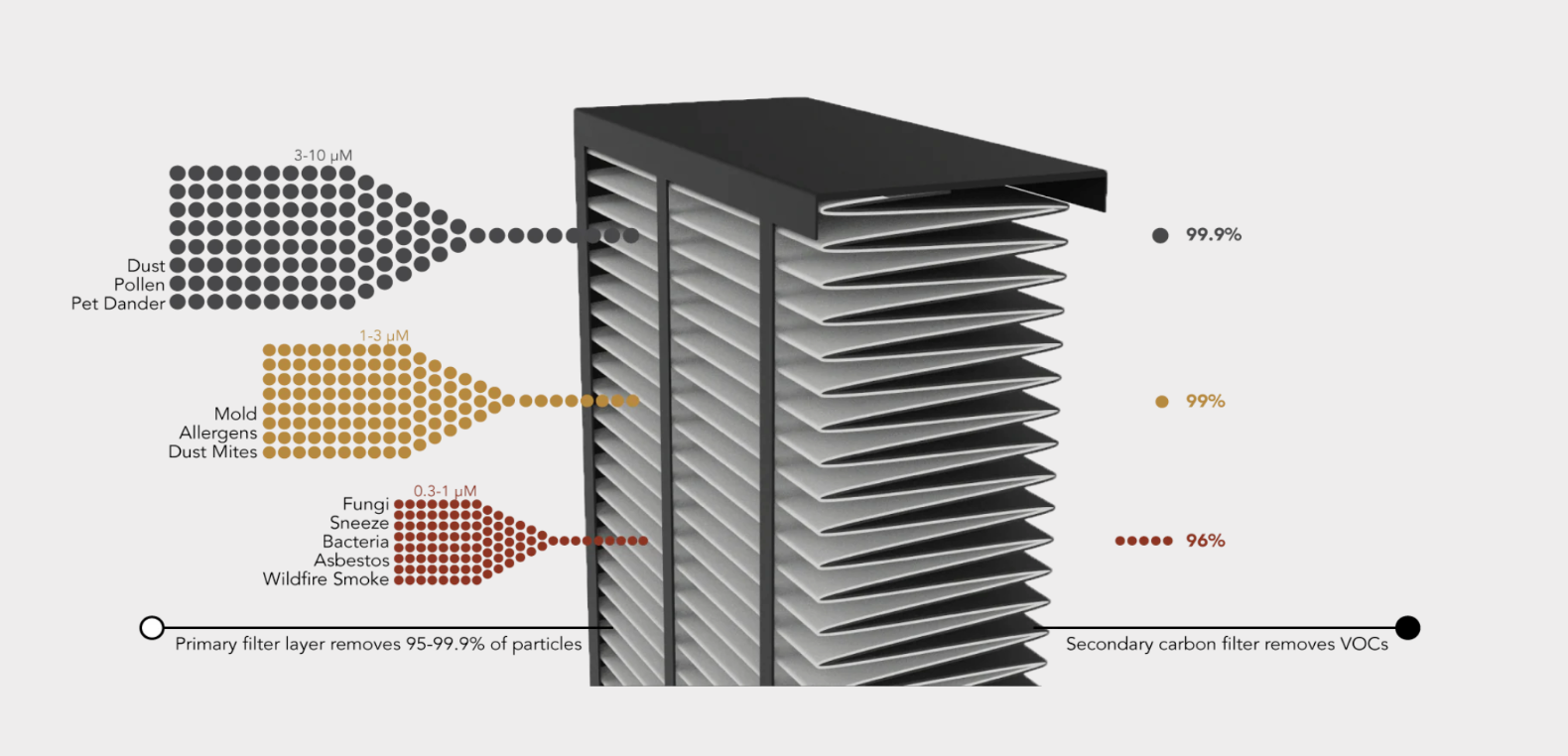
MERV16 filter data
What a Proper Air Duct Cleaning Process Looks Like
A professional cleaning in an SF home typically includes:
System inspection (supplies, returns, plenum, access points)
Mechanical agitation (when safe and appropriate)
HEPA source capture so dust isn’t spread into the home
Cleaning of the return plenum and accessible components
Before & after photos
Optional disinfection (Sporicidin, by request, scheduled in advance)
In homes with asbestos-wrapped or inaccessible ducts, this process is modified to use negative pressure without agitation to keep things safe.
How Long It Takes and What to Expect
Most jobs take a few hours, depending on:
System size
Number of vents
Duct condition
Accessibility (crawlspace, basement, attic, etc.)
Homeowners usually stay home during the work. Expect some noise and technicians accessing vents and mechanical areas—but a proper job should not turn your house into a dust storm.
Air Duct Cleaning in San Francisco: Common Questions
Does air duct cleaning actually improve air quality?
Yes—when there’s real contamination and it’s done properly, especially combined with good filtration and sealed ducts.
How often should ducts be cleaned?
There’s no fixed schedule. It’s situation-based (remodels, contamination, airflow or odor issues).
How much does air duct cleaning cost in San Francisco?
It depends on system size, number of vents, access, and method required. Real cleaning costs more than “coupon” jobs—but actually does the work. Systems requiring negative-pressure-only methods are scoped differently.
Does it make a mess?
No—when done correctly with source capture.
Is disinfection necessary?
Usually not. Only recommended in specific cases and must be scheduled in advance.
What if my ducts are asbestos-wrapped?
We avoid agitation and use a negative-pressure-only containment approach to reduce risk.
The Bottom Line
In San Francisco homes, air duct cleaning isn’t about gimmicks. It’s about:
Using the right method for the right system
Removing debris at the source
Adjusting the approach when asbestos or access limitations exist
Making sure the work actually supports air quality and system performance
Done correctly, it’s a practical way to reset a contaminated system—without creating unnecessary risk.
Want Your Ducts Cleaned the Right Way?
We’ll inspect the system, choose the safest and most effective method, clean it properly, and show you before/after photos.